
National Mississippi River Museum & Aquarium
The Civil War on the River
INTERPRETING A WATERSHED MOMENT IN AMERICAN HISTORY
The National Mississippi River Museum & Aquarium set out to explore a lesser-known dimension of the Civil War: the pivotal role of the Mississippi River in shaping strategy, supply lines, and the broader fight for freedom. The goal was to connect national events to local geography, helping visitors understand how the river just outside the museum helped influence the course of the war.
We partnered with the museum team to develop and fabricate a compact, 800-square-foot exhibit that balances historical context with accessible design. Featuring life-sized graphics, era-specific signage, and clear educational framing, the exhibit invites visitors to consider how transportation, terrain, and leadership intersected during one of the most defining conflicts in U.S. history.
SERVICES:
– Project Management
– Copyediting
– Design
– Elevation Drawings
– Graphic Production
– Fabrication
– Installation
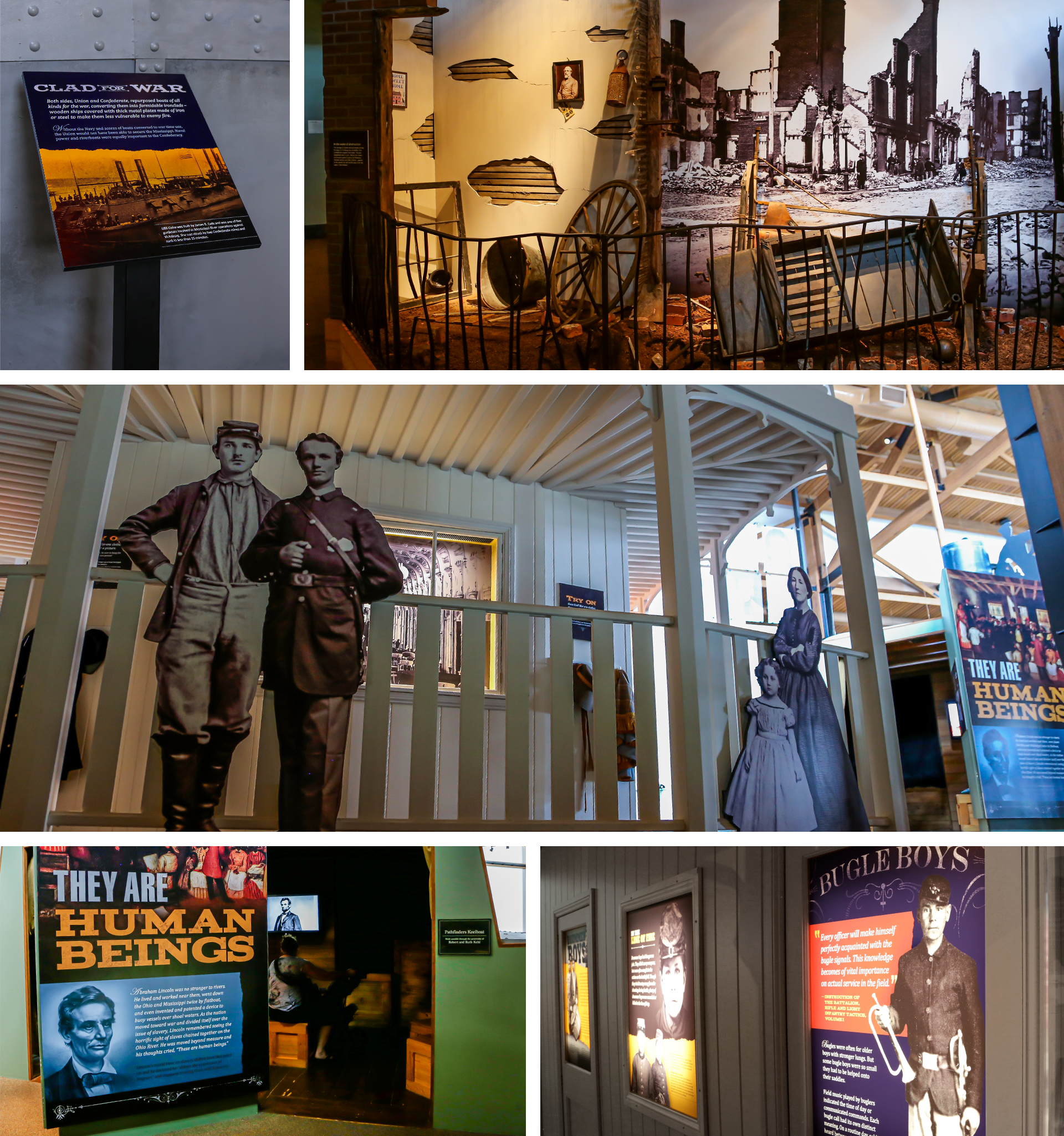
LIFE ON THE FRONT LINES
Life-sized cutouts of Civil War figures give visitors a powerful sense of scale and presence, while educational displays, period-inspired signage, and interpretive graphic panels guide them through key events and turning points in the war. Every detail was created to evoke the look and feel of the 1860s while delivering clear, accessible information.
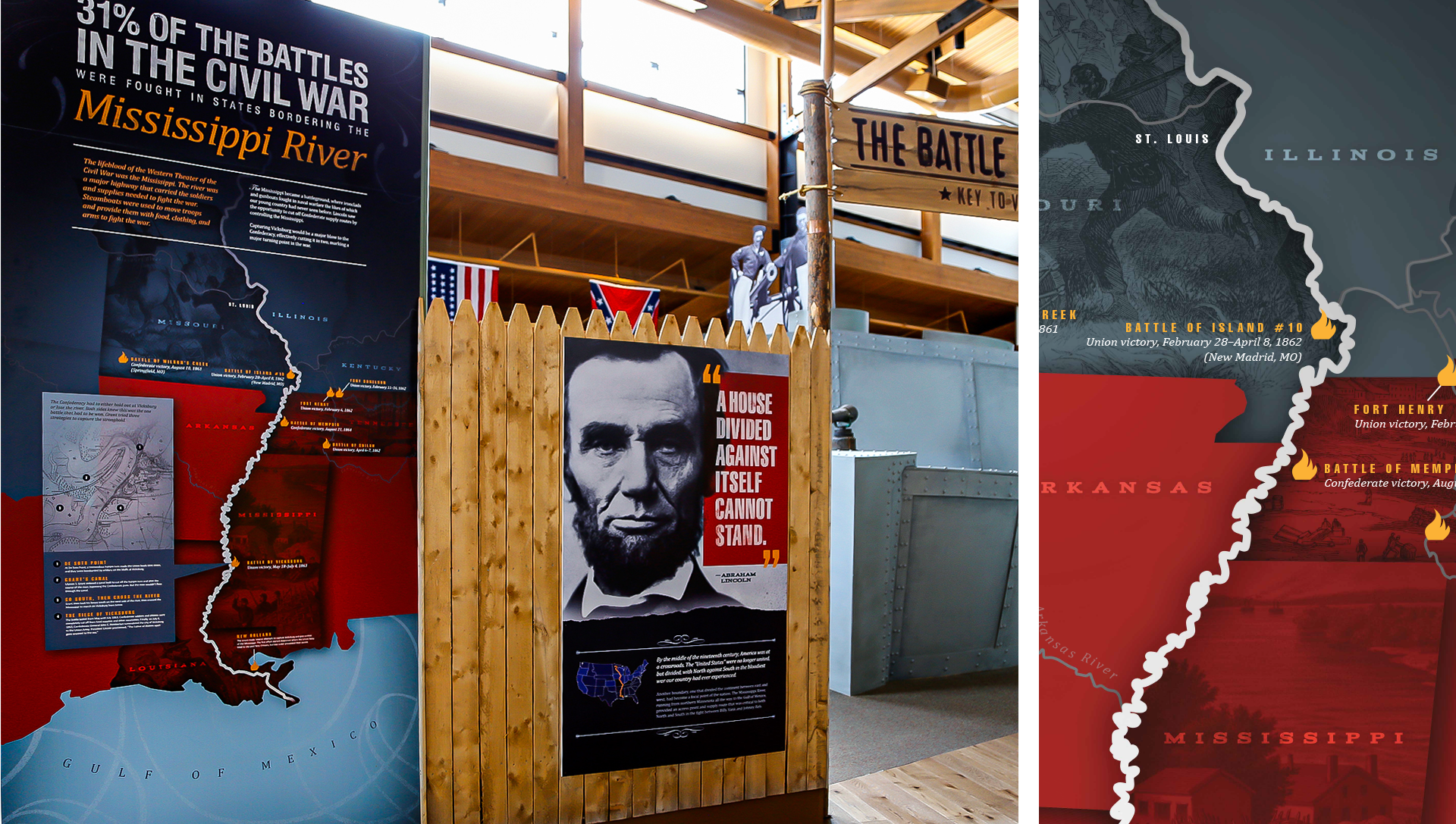
WHERE HISTORY MEETS THE RIVER
A large custom map anchors the space, tracing the full length of the Mississippi River and highlighting key Civil War battles fought along its banks. The visual geography helps visitors orient themselves within the national conflict, placing Dubuque and other regional communities within a broader strategic narrative. It's a clear, visual reminder that the river wasn’t just a backdrop—it was a battleground.
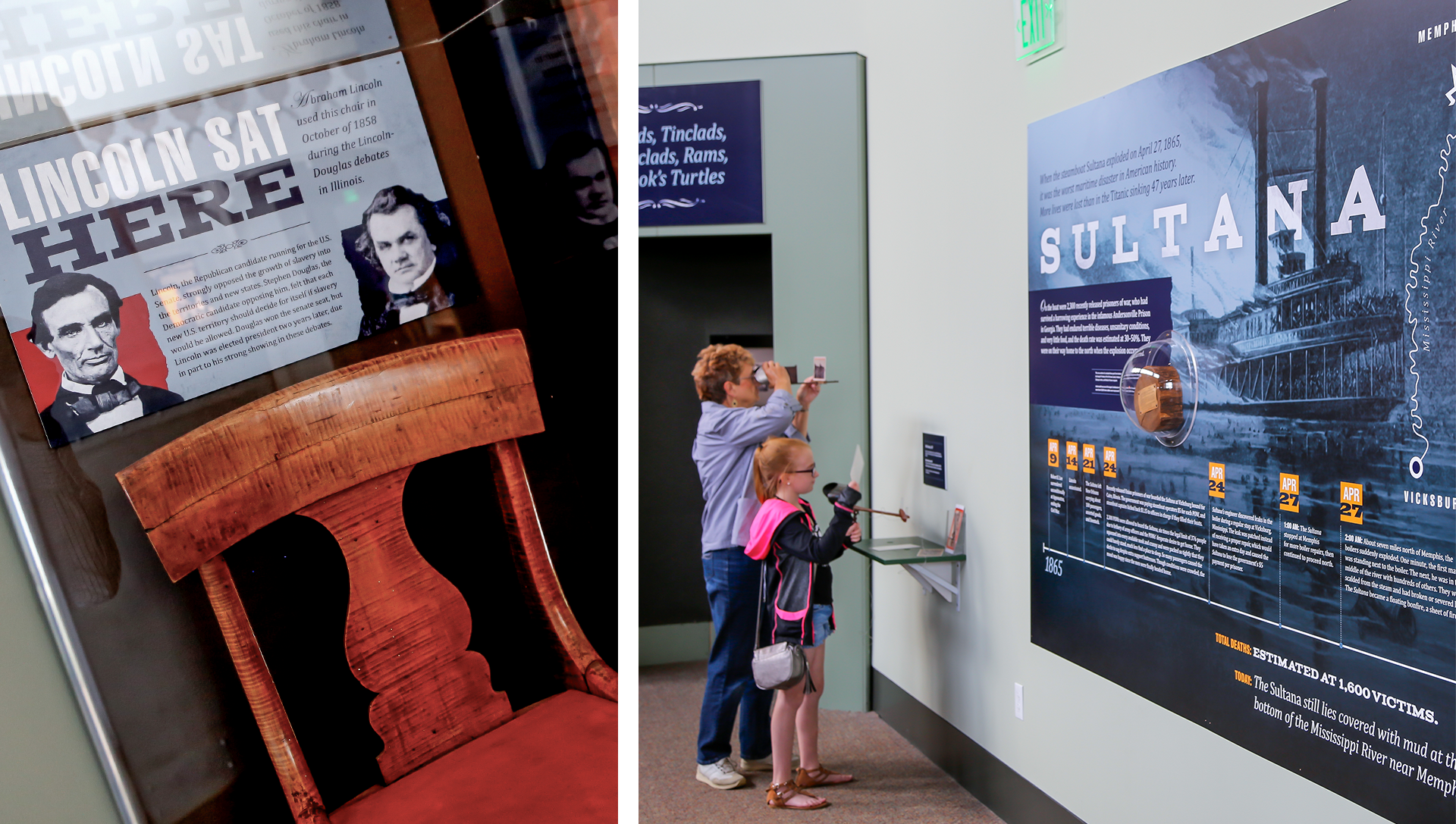
ARTIFACTS THAT SPEAK VOLUMES
A small number of artifacts make a big impact. A wooden chair once used by Abraham Lincoln offers a rare, intimate connection to the president’s presence during the war. A fence post from a Confederate prison yard connects visitors to the story of the Sultana, a steamboat that exploded and sank on the Mississippi in 1865 while carrying over 2,000 recently released Union prisoners. These objects bring scale, emotion, and authenticity to the exhibit.
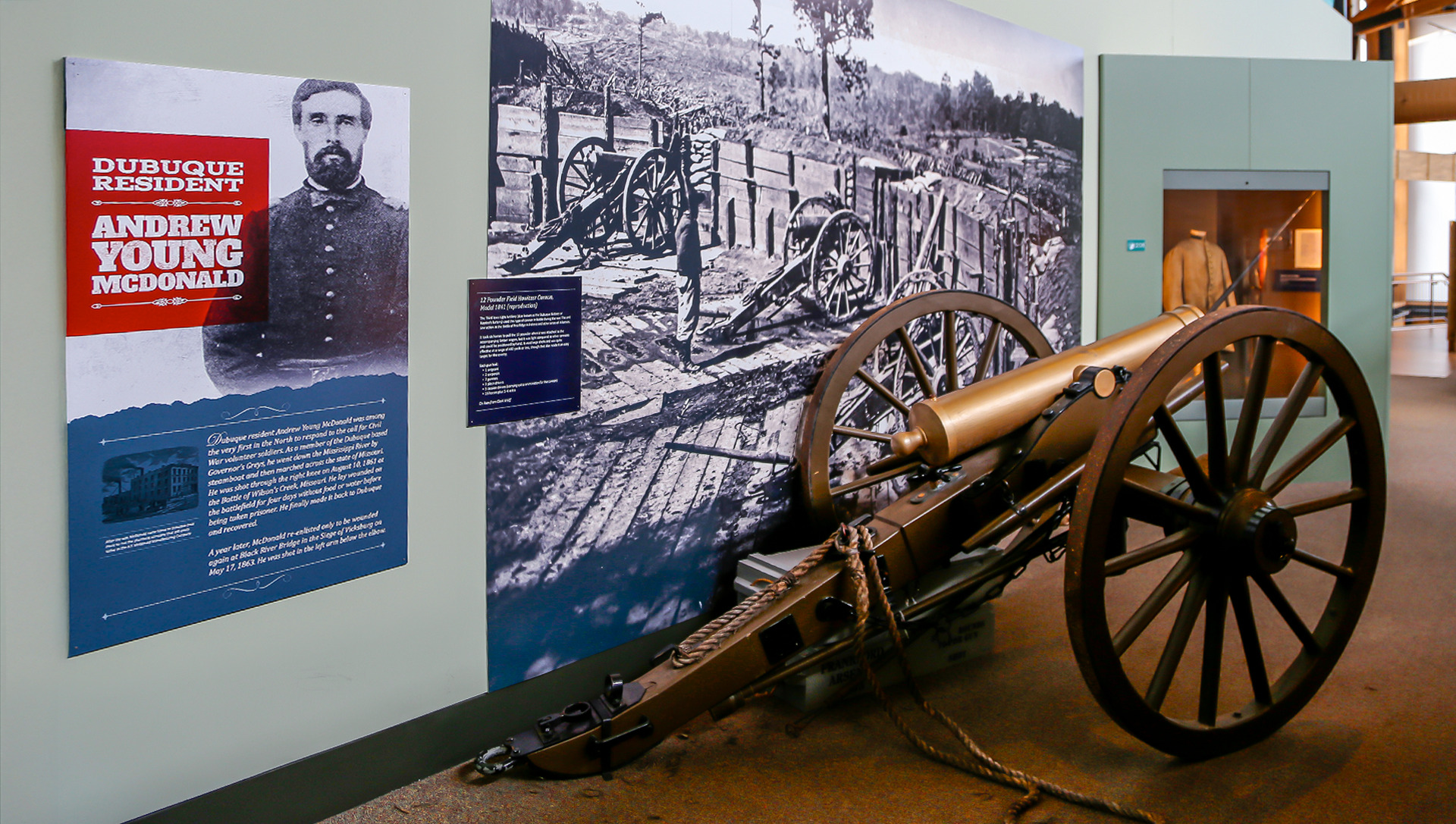
FACES BEHIND THE FIGHT
The exhibit also brings forward the people whose lives were shaped by the war—including a Dubuque resident wounded in battle. Personal stories like this add depth and relatability, reminding visitors that the Civil War was not just fought on distant battlefields—it was lived and felt in local communities.